Feeds:
Posts
Comments

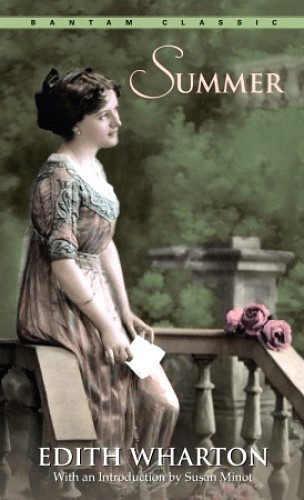
I’ve added Charity Royall from Edith Wharton’s Summer to my list of favorite heroines.

I can’t help but love her.

I love the way she embraces nature like a young female John Muir appreciating every stone and blade of grass.  The way she springs from her library desk to the grassy hills that lie beneath the dark and beckoning mountains make me want to throw my  laptop out the window and take my dogs for a walk.

Not quite as adventurous as Charity, I know. But you get my drift.

There is also a tinge of Doroles Price from She’s Come Undone in Charity.  Another of my favorite heroines.  The tragic sharp-tongued girl who uses sarcasm as her main defense weapon.  (Charity, however, does not turn to Cheez Whiz for comfort as does Dolores, but instead turns to the educated, b-s-ing architect, Harney).

Harney, the handsome and oh, so charming “Willougby” of Summer.  I found their relationship to be Austenesque in so many ways that I felt I was reading an Austen (different time, different place, etc.) novella.  And Mr. Royall?  He would be the Colornel Brandon-like character of Summer; loving Charity unconditionally (and fatherly, which makes it a bit yukky for Charity).  Colonel Brandon, by the way, (from Austen’s Sense and Sensibility) is, in my opinion, one of Austen’s most underrated heroes.  Given, he’s no Mr. Darcy, but he’s up there for sure.

Summer, which I read the week my son returned to school — kissing our favorite season goodbye — is a book I’m tempted to re-read before the end of the year. It’s just that good (plus it’s only 100 pages).  Technically, I suppose, it’s a novella and if you’ve read my thoughts on short stories or Kafka, you know I appreciate that fact.

The power of the word!  Less is more.

How a story this powerful can be crammed into 100 pages, I’ll never know, but it takes an awesome amount of talent to do so.

Edith Wharton’s, The House of Mirth, is one of my favorite books.  It quite simply blew me away.  There were so many times her words stole my breath — like music — expressing the inexpressible. I’m unable to lend my copy to anyone as I’ve marked up the margins…considerably.

Each time I come to the last page of one of Wharton’s books and face those impending words, THE END, sadness creeps in.  I simply can’t get enough.

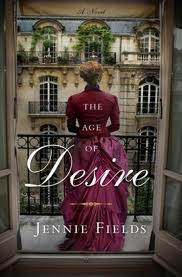
So, you can imagine how happy I was when I saw the recently published, The Age of Desire by Jennie Fields, on one of my various newsfeeds.

The Age of Desire is about the life of Pulitzer Prize-winning American novelist Edith Wharton with (of course) some historically fictionalized dialog and writing liberties taken in order for the book to read like a story.  And it reads so beautifully!

Author Jennie Fields, a Wharton enthusiast herself, put great effort into weaving together a journey through Edith’s life enabling us to get a glimpse of Wharton’s family, friends (such as Henry James), and her many travels between New York, Lenox, Massachusetts, and Europe making the book a very readable and enjoyable story.

Seeing Edith in all her humanity, her struggles, her broken relationships, and of course the process of her writing made Edith-the-person very real for me.

There are plenty of tidbits that admirers of Wharton might appreciate in the book.  Personally, seeing how Edith’s mother may have subtly played a part in the creation of the character, Undine Spragg, was in and of itself an epiphany.

She had everything she wanted, but she still felt, at times, that there were other things she might want if she knew about them.

*   *   *

This week, I finished reading Edith Wharton’s, The Custom of the Country, starring your least favorite heroine and mine:  Miss Undine Spragg (perhaps the ugliest name an author has ever bestowed upon a character).

Undine Spragg:  material-girl, ladder-climber, MERCENARY.

I should point out that her initials are in fact “US” and some — some —  have suggested that Wharton was using social commentary on the obsession with materialism in her home country.  She grew up in New York City (Wharton, that is), got married to Teddy Wharton (who suffered from severe depression), won a Pulitzer Prize for The Age of Innocence, eventually divorced Teddy, then left the states to continue her writing in Europe.  She died in Saint-Brice-sous-Forêt.

Her unlikable (understatement! understatement!) character, Undine, is a pathetically self-centered, loathsome (albeit gorgeous) young woman.  The worst wife, mother, daughter, human being you could possibly imagine.  (She’s no Jack-the-Ripper, killing instantaneously, but spins her web slowly; manipulating good people into a slow kind of death; bankrupting them of their souls….and finances).

She’s set on making her way up the nouveau riche ladder by landing a rich husband, buying expenses dresses and getting in with “the right set.”  The ladder never seems to end for Undine.

But one has to wonder if she is solely to blame.

Because monsters (like Undine) are not born monsters.  They are created.

Spoiled rotten from crib to alter, she managed to dictate the lives of her middle-class (and eventually poor) parents via childhood/teenage dramatic tantrums and dark moods.

The word “No” never seemed to hold much weight for Undine.  Everyone (except her 3rd hubby) caved when confronted.  She always got her way.  Her miserable way.

The symptoms of Undine’s nervousness were unmistakable to Mr. and Mrs.
Spragg. They could read the approaching storm in the darkening of her
eyes from limpid grey to slate-colour, and in the way her straight
black brows met above them and the red curves of her lips narrowed to a
parallel line below. — The Custom of the Country

So although I may be completely exasperated with Undine, I’m not with  Wharton.

Not by a long shot. The Custom of the Country may be one of the best books I’ve ever read.

Next stop, Wharton’s Summer.

Newland Archer (the main character in The Age of Innocence) is in love.  

And, although he may not recognize it, the reader does.

Wharton (like Jane Austen) brilliantly uses the powerful means of dramatic irony in her stories which allow the reader to be placed into a position of superiority.  As the reader grasps the inner thoughts of the characters, the characters themselves (poor things) are lost in a state-of- confusion.

In The Age of Innocence, I have the strong urge to shake Newland and shout “Wake up you moron!  Don’t you know that you’re in love!”

Here are just a few examples:

…He had the feeling of unexplained excitement with which, on half-holidays at school, he used to start off into the unknown…. 

…The longing was with him day and night, an incessant undefinable craving, like the sudden whim of a sick man for food and drink once tasted and long since forgotten…  

…he could not see beyond the craving, or picture what it might lead to, for he was not conscious….

And these words which scream LOVE from the rooftop:

…He simply felt that if he could carry away the vision of the spot of earth she walked on, and the way the sky and sea enclosed it, the rest of the world might seem less empty.  

From The Age of Innocence by Edith Wharton