Feeds:
Posts
Comments

There is something so beautiful about dappled light.

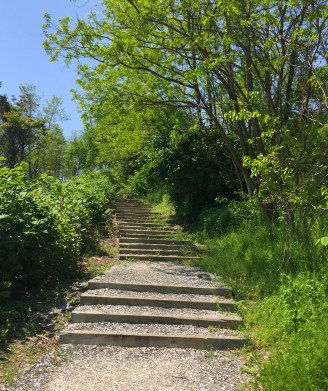
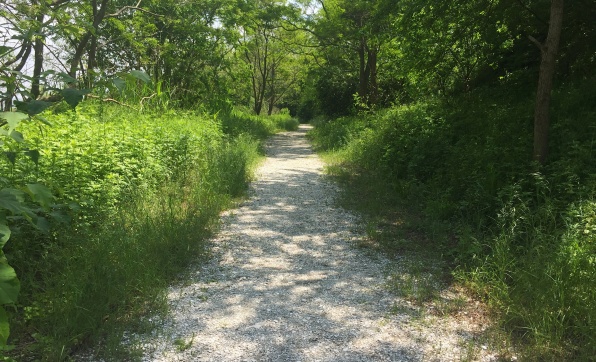
My hike today included a long path with such light.  It lay before me, like a regal carpet with a welcoming invitation.  “Become dappled as well,” it seemed to say.

And so I did.

I walk steadily along, with a gentle breeze, tall trees on either side; light piercing through numerous spaces in the canopy of branches above. dappled
I brought a poetry book (this has become a new habit). Poetry, I thought, might be considered dappled words and befitting to read in such light.

I opened to the first poem, a well-known poem, a favorite.

Renascence, from The Selected Poems of Edna St. Vincent Millay:


*****

The world stands out on either side

No wider than the heart is wide

Above the world is stretched the sky, –

No higher than the soul is high.

The heart can push the sea and land

Farther away on either hand;

The soul can split the sky in two, 

And let the face of God shine through. 

Excerpt from Renascence, Edna St. Vincent Millay

sun

Wishing you all a peaceful weekend full of long paths,

tall trees,

and dappled light.
 

It was a long winter.  For everyone.

But today — as I was hiking under a clear blue sky — I felt the weight of winter (finally) lifting.

Oh, the joy!

Nature has the incredible power to change our mood and also open doors of inspiration that allow words to flow easily and naturally.  She also helps us to notice beauty (if we listen).

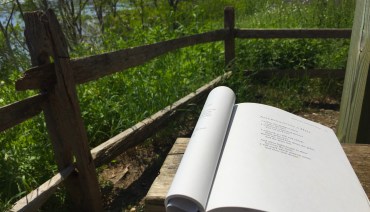
During my hike, halfway up the hill, I sat down on a bench and took out my paperback copy of The Selected Poems of Edna St. Vincent Millay to a most appropriate page:

***

I will be the gladdest thing

   Under the sun!

I will touch a hundred flowers

   And not pick one.


I will look at cliffs and clouds

   With quiet eyes,

Watch the wind bow down the grass,

   And the grass rise.


And when lights begin to show

   Up from the town,

I will mark which must be mine,

And then start down.

— Afternoon on a Hill, Edna St. Vincent Millay

I’m hoping that the coming (warmer) months will bring more days “under the sun” and will fulfill us all in such a way that the simple touch of a flower will bring us joy, gladness, and inspiration.

To be outdoors — experiencing nature in her full glory — just feels “right,” doesn’t it?

Going forward, I will be spending less time on the computer and more time just “listening.”  

I will not miss my computer.

I don’t think anyone on their deathbed has every uttered, “Oh, how I wish I’d spent more time on my laptop.”

So, enjoy the weekend,

breathe some fresh air,

and spend an afternoon, outdoors,

perhaps on a hill,

and listen.


Today, over at What Jane Austen Didn’t Tell Us, we are revisiting a post on the similarities between the sonata form and Austen’s writing.  

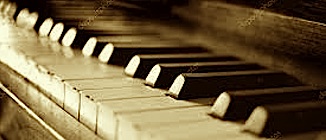
I found it interesting and compelling, when listening to Pleyel’s Sonatina in D Major in its sonata form (exposition, development, and recapitulation), to imagine Jane Austen, the musician.  Did she, I wonder, internalize the sonata three-part formula for her stories?  Her novels, as we know, are in three-part volumes.  There are some that speculate that, in fact, she did.  

Continue reading…

pianokeys1

Today, over at What Jane Austen Didn’t Tell Us, Meg Levin discusses what Austen meant by an “accomplished woman.”

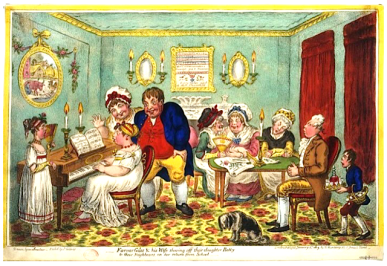
One of the most interesting scenes in Pride and Prejudice is the three-way conversation among Elizabeth Bennet, Caroline Bingley and Mr. Darcy on the subject of accomplished women. Along with skill at needlework and various crafts, Miss Bingley declares that “a woman must have a thorough knowledge of music, singing, drawing, dancing, and the modern languages, to deserve the word; and besides all this, she must possess a certain something in her air and manner of walking, the tone of her of her voice, her address and expressions, or the word will be but half deserved.” Darcy adds, “…and to all this she must yet add something more substantial, in the improvement of her mind by extensive reading.”

accomplishedMiss Bingley‘s views were commonly held by upper class women who wanted to catch an eligible bachelor. But many of Jane Austen’s readers would have known that the proper education of women was a controversial subject at the turn of the nineteenth century.


Continue reading…