Today, over at What Jane Austen Didn’t Tell Us, we are revisiting a post on the similarities between the sonata form and Austen’s writing.
I found it interesting and compelling, when listening to Pleyel’s Sonatina in D Major in its sonata form (exposition, development, and recapitulation), to imagine Jane Austen, the musician. Did she, I wonder, internalize the sonata three-part formula for her stories? Her novels, as we know, are in three-part volumes. There are some that speculate that, in fact, she did.
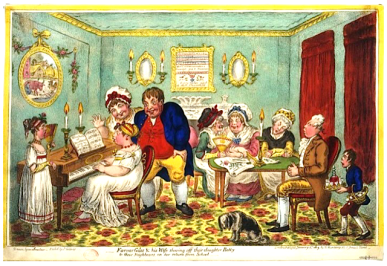 Miss Bingley‘s views were commonly held by upper class women who wanted to catch an eligible bachelor. But many of Jane Austen’s readers would have known that the proper education of women was a controversial subject at the turn of the nineteenth century.
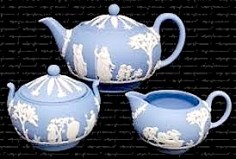 Jane Austen didn’t tell us what brand of china the Bennets used, but the Austens ate off Wedgwood plates. She refers to her family’s own Wedgwood collection in a letter to Cassandra in which she writes to her sister about “the pleasure of receiving, unpacking & approving our Wedgwood ware.”