Feeds:
Posts
Comments

Archive for the ‘Uncategorized’ Category

Today, Gene Gill, contributing editor of What Jane Austen Didn’t Tell Us!, writes about Jane Austen and country inns.

posted by Mary C. M. Phillips's avatar

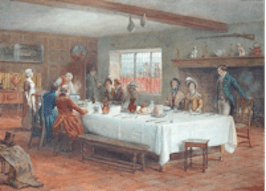
Jane Austen didn’t tell us the name of the Meryton inn where Elizabeth Bennet first observed a “proud, disagreeable gentleman” at the Assembly ball in Chapter 3 of Pride andPrejudice. I needed a name for that inn when writing Charlotte Lucas’ backstory since I imagined her father owning the establishment. I felt that Mr. Lucas, a social climber, would have named his inn for the highest possible social class, royalty, and so—consulting a list of the most popular names for 18th century English inns—The Rose & Crown seemed an obvious choice.

Country inns in Jane Austen’s time had evolved from rough coaching inns meeting only
travelers’ needs into places that also could serve as a town’s club, place of assembly and general resort. Of course, the local English inn continued to serve travelers, evoking this favorable commentary from an Englishman: “Neat inns, well-dressed and clean people keeping them…

View original post 259 more words

Read Full Post »

Today, I’m writing over at WHAT JANE AUSTEN DIDN’T TELL US! about Austen’s love of music and how a story outline might be influenced by a sonata.

posted by Mary C. M. Phillips's avatar

During my research for Georgiana Darcy’s story in WHAT JANE AUSTEN DIDN’T TELL US!, I learned some things about Jane Austen, the pianist, which I’d like to share:     

Jane Austen studied piano until the age of 21, which would imply a serious interest in music and it was her custom to play every morning before she wrote.

Austen was particularly fond of the composer, Ignza Pleyel (a student of Haydn) whose work was described as possessing a “charm of simplicity and feeling.”

Today, I found it interesting and compelling, when listening to Pleyel’s Sonatina in D Major in its sonata form (exposition, development, and recapitulation), to imagine Jane Austen, the musician.  Did she, I wonder, internalize the sonata three-part formula for her stories?  Her novels, as we know, are in three-part volumes.  There are some that speculate that, in fact, she did.

In Pride and…

View original post 131 more words

Read Full Post »

Today is Jane Austen’s birthday! A fine day to spend with friends — and fellow Janeites — and a perfect day to announce the release of What Jane Austen Didn’t Tell Us!

For lovers of Pride and Prejudice, the characters are like old friends.  Everyone knows the who and the what of the cherished tale, but What Jane Austen Didn’t Tell Us! fills in the how, why – and especially the when.

Seventeen dramatic portraits take us into the lives of the story’s beloved figures before they enter the pages of the novel. Triumphs and follies, victories and social disasters, the characters’ pasts reveal hidden secrets, unexpected intersections, and new motivations for all the goings-on from Longbourn to Pemberley – and all places in between.

Contributing writers include:  Linda Dennery, Gene Gill, Bill McCay, Linda Pedro, Rosemarie Santini, Anvita Budhraja, Meg Levin, Clarice Neudorfer, Mary C. M. Phillips, A. Marie Sprayberry and Paul Wray.

Happy Birthday Jane!

Read Full Post »

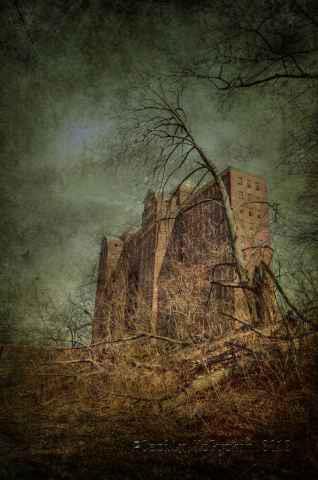
A monster, a zombie, or a silent house?  Which is the scariest?

Photo by Cecily McGuckin

The last…according to Edith Wharton.

And she’s not the only writer (or artist) of that opinion.

I remember reading an interview with Sir Anthony Hopkins years ago. He was asked about his portrayal of the character Hannibal Lecter in The Silence of the Lambs.   How did he go about playing the role of such a frightening character?

Mastering the art of stillness.

That was the key.  I remember him saying that the combination of his physical stillness — along with the activity that went on behind his eyes — was what made the character so frightening. Remember him standing perfectly still in that prison cell?

The Ghost Stories of Edith Wharton, a collection of short creepy stories, uses the same approach.  No blood.  No fangs.  No outright monsters.  Just layers of silence, stillness, confusion, and doubt.  Unsettling stuff, indeed.

The last story in the book, All Souls’, is told by a narrator.  It’s a story about a cousin who has fractured her ankle and must remain in bed until the doctor returns on Monday.  That night, as a snowstorm hits, she struggles to remain calm within a large house in a remote countryside.  In the early hours of morning, she is in agonizing pain.  She calls her servants. No one answers; the phone has been disconnected.  She’s forced to crawl through the large empty house looking for life.  Where has her trusty maid gone? Where is the butler?  Poor Mrs. Clayburn.  Snowbound with a broken leg à la James Caan in Misery 

Silence. Only silence.

More and more the cold unanswering silence of the house weighted down on Mrs. Clayburn.  She had never thought of it as a big house, but now, in this snowy winter light, it seemed immense, and full of ominous corners around which one dared not look…More than once she had explored the ground floor alone in the small hours, in search of unwonted midnight noises; but now it was not the idea of noises that frightened her, but that inexorable and hostile silence, the sense that the house had retained in full daylight its nocturnal mystery, and was watching her as she was watching it…

Read Full Post »

« Newer Posts - Older Posts »